
Project management has a problem.
Somewhere along the way, we started confusing looking professional with being effective. We’ve built elaborate processes, endless governance, and increasingly sophisticated reporting—not always because they help projects succeed, but because they make us feel like we’re managing.
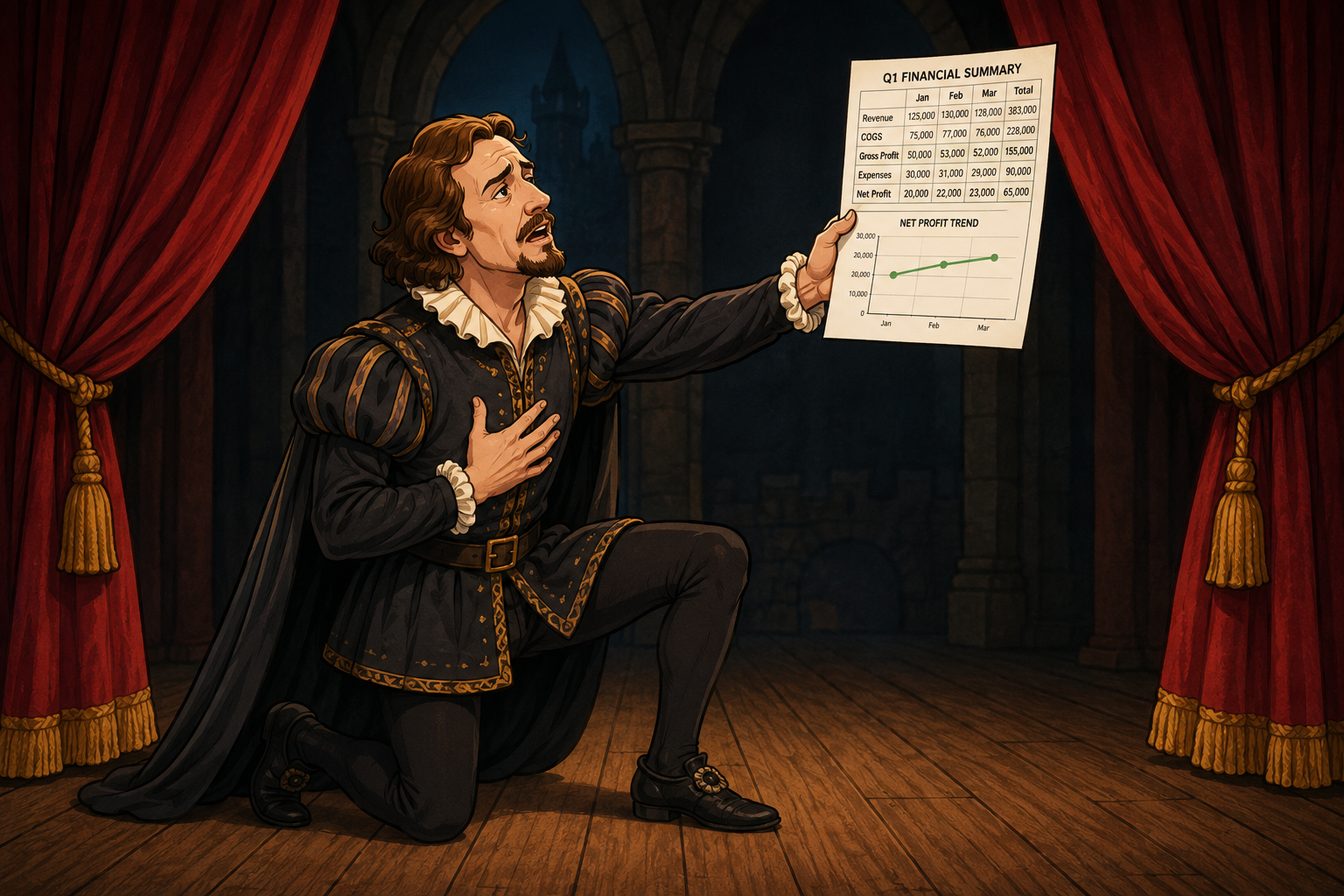
It’s the performance of project management rather than the practice of it – a theatre of complexity that gives the appearance of serious work being done but is, in fact, a distraction from the real work (and indeed purpose) of project management.
Now, to be clear, processes, governance and documentation all have their place. The problem comes when they become the goal instead of the means to an end. At best, complexity theatre ends up obscuring – at worst eliminating – the underlying principles of what we are trying to do.
Doing project management well is an incredibly difficult balancing act that requires a number of skills and – yes – is complex. But project management itself, the core principles that drive it forward, the foundational principles that make projects work – these things are not complex.
So why does this happen?
We’ve been hurt before
A project went badly. A risk wasn’t identified. A stakeholder wasn’t informed. A report didn’t contain the information someone needed.
We don’t want this to happen again… so we add another approval stage. Another report. Another checklist. Another meeting.
The irony is that many of these failures were one-off events, yet we build permanent processes to protect against them forever.
We’ve all had relationships that didn’t work out, but you don’t put that baggage on the next person. Eventually, you’re solving yesterday’s problems instead of today’s.
Not every idea that sounds sensible actually is. Take the classic RAID log.
Risks, assumptions, issues and dependencies are all useful concepts, but do they really belong in one giant document that everyone updates and nobody reads? Or have we simply accepted it because “that’s what project managers do”?
Does it actually help your project to have these all-in-one documents (or tools)? Or is it sufficient to have a standalone risk register to manage your risks; a decent dedicated planning tool to manage your schedule; an issues register that measures and treats issues differently from risks? Because too often, I see project management judged by whether or not a PM has a RAID log – or the RAID log gets wheeled out as proof that the PM was “doing the job” of PM.
Technology has become too clever
We’re living in an age of incredible tools. Power BI dashboards. AI. Automated reporting. Integrated project platforms.
These technologies are genuinely impressive, but they also make it dangerously easy to produce vast amounts of information that nobody actually needs. I’ve seen dashboards that can tell you everything except the one thing executives really want to know: is the project on track to deliver?
Data isn’t information. And information is what helps people make judgements and decisions about a project portfolio.
Simplicity feels wrong
Project Management is difficult, right? LinkedIn and other PMs tell us so. So, the simple solution can’t possibly be the correct one. If something feels too simple, we instinctively distrust it.
But difficult isn’t the same as complex. Managing people, balancing priorities and making decisions are difficult because they’re human problems—not because they require ever-larger process diagrams.
Sometimes the simplest answer really is the best one.
Legacy and laziness
Complexity also accumulates because nobody removes anything. A report gains another section because someone asked for it ten years ago. A governance meeting continues because it’s always existed. A project manager spends hours producing information that another team could easily obtain themselves.
Nobody questions it because “that’s how we’ve always done it.” Before long, your project is carrying years of historical baggage that no longer serves any purpose.
And then there’s ego
People like feeling important. People also don’t like admitting they don’t understand something. So complicated language, complex frameworks and impressive-looking processes survive because questioning them feels uncomfortable.
It’s the Emperor’s New Clothes all over again. Sometimes the bravest question in project management is simply: “I don’t understand. Could you explain that to me?”
The symptoms of Complexity Theatre
If any of these sound familiar, your organisation may have caught the bug.
- Dashboards full of data but short on insight.
- Increasingly elaborate, or multi-layered approval processes.
- Layer upon layer of governance boards.
- Measuring documentation rather than delivery.
- New tools that promise to replace all the old tools—but somehow add another one instead.
- Scoring issues like risks because the spreadsheet says they should look the same.
- Borrowing methodologies from other organisations without asking whether they fit yours.
None of these automatically make a project better. In fact, many simply make project management more expensive.
The cure
Project success is delivery on time and within budget. Everything else is set decoration. Don’t tell me it’s harder than that – it isn’t. If you have time to carry out an Earned Value Analysis but you can’t tell me the project end date, you’re not a PM.
Measure what actually matters
Two simple things:
Forecast vs. baseline – Did you deliver what you promised? Did you do it when you said you would? Did you stay within the agreed budget?
Completion, not percentages – Progress percentages are often meaningless. People should be making decisions using hard information — not because a project is estimated by someone as being “83% complete.”
Trust people – but hold them accountable
Don’t micro-manage. Project management is about conducting the orchestra. Lead people by showing them the destination, not telling them how to drive. Let them do their jobs and you’ll be amazed at what they come up with.
Trust your team to work out how they’ll deliver, you’re interested in the outcomes, not every individual task. But when people make commitments, hold them accountable for delivering them.
Ask “why?”
Every process.
Every report.
Every governance board.
Every meeting.
Ask what value it adds. If nobody can answer that question, perhaps it shouldn’t exist.
Train for competence, not certificates
Qualifications are valuable, but if you’re a certified PM, you’ll know full well that it isn’t the certification that made you a great PM. Real capability comes from judgement, communication, leadership and experience.
Invest in developing those skills. If you want to train teams of PMs to be more successful, find a course that supports the areas where you are weak. Or save a huge amount of time and just call me!
Be bold enough to be simple
Project management simply shouldn’t be creating complexity, it should be removing it.
Simple often feels uncomfortable because it forces us to justify everything that remains. But simple systems are easier to understand, maintain and improve. And crucially, they are far, far more effective.
So next time someone proposes another report, another meeting or another governance layer, ask one simple question: what problem does this actually solve?
You might discover you’re not improving project management at all. You’re just adding another scene to the theatre.
To receive these blogs, project management tips and video tutorials straight to your inbox click here to sign up to our newsletter.